Improving Care Delivery With Ambient Technology
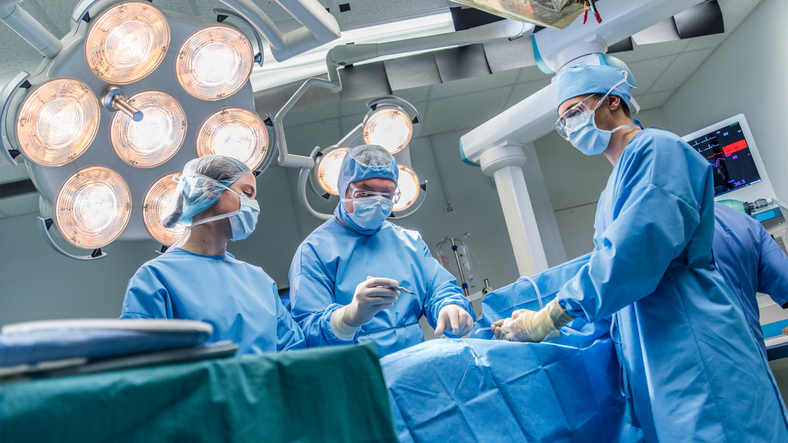
A future where ambient technology is integrated across all hospital spaces — patient rooms, ORs, even waiting areas — will revolutionize decision-making to improve care.
Corvus, a Chicago-based startup aiming to simplify the surgical referrals process, announced its launch. The company’s AI platform helps healthcare teams manage inbound surgical referrals more efficiently, ensuring patients are routed to the right treatment while also optimizing operating room utilization.
As operating environments become more complex, every element and system must be reliable, safe, and compliant with the web of regulations. Testing is the antidote to address these issues, however, this presents a significant testing burden. Here are some key challenges.
Contrary to fears of clinician replacement, AI’s near-term potential lies in complementing human expertise, particularly by handling behind-the-scenes tasks that improve efficiency and precision. Here’s where we might see the most impact.
Caresyntax closed a $180 million Series C extension round, bringing its Series C fundraising total to $310 million. The company sells AI-based precision surgery technology that unifies operating room data on a single platform.
The integration of AI and human skills is poised to revolutionize surgical practices.
Alan Murray on improving access for medical transportation.
Banner Health is deploying Qventus’ perioperative technology across the entire organization following the success of an initial pilot. The software integrates with EHRs and uses machine learning to automate operating room scheduling processes and maximize surgical caseloads.
After adopting Qventus’ perioperative solution, Allina Health has seen significant gains in surgical case volume and operating room efficiency in just a few months of using the software. The health system's vice president of surgical services and orthopedics recommended that other health systems adopt automation technology. He said the ROI was clear, but the health system declined to provide actual dollar figures.
As hospitals continue to battle healthcare’s workforce shortage and high levels of staff turnover, capacity is a significant pain point. When it comes to technology to help optimize capacity management, hospital leaders want solutions that can automatically identify and prioritize patients who are ready for discharge using real-time data, according to a new report.
Manual processes and inadequate analytics frequently prevent hospitals from achieving OR revenue and utilization goals. By using automation, behavioral science, and comprehensive real-world data, hospitals can unleash the full potential of their OR enterprises and supercharge perioperative growth.
In a landscape where complexity has long been the norm, the power of one lies not just in unification, but in intelligence and automation.
Health systems are seeing increased operational efficiency after applying machine learning analytics to their operating room block scheduling. Given the multitude of challenges health systems face — from increased labor costs to material shortages to reimbursement woes — some health system digital executives say it’s critical that hospitals incorporate machine learning into their block schedules sooner rather than later.
Sony received 510k clearance for its OR integration system, NUCLeUS, which allows surgeons to connect numerous instruments, screens and other applications to one platform. Sony has been selling the technology in Europe, and can now market and sell it in the U.S.
Boston-based Caresyntax raised $45.6 million and acquired Syus, an analytics provider for hospitals.
The Chicago-based startup's tool, which is focused on boosting communication and coordination between all members of the surgical team, aims to reduce errors and improve OR efficiency.
The company will also use the Series C funding from Northwell Health, SoftBank Ventures Korea and others to develop new AI-driven applications for the operating room.